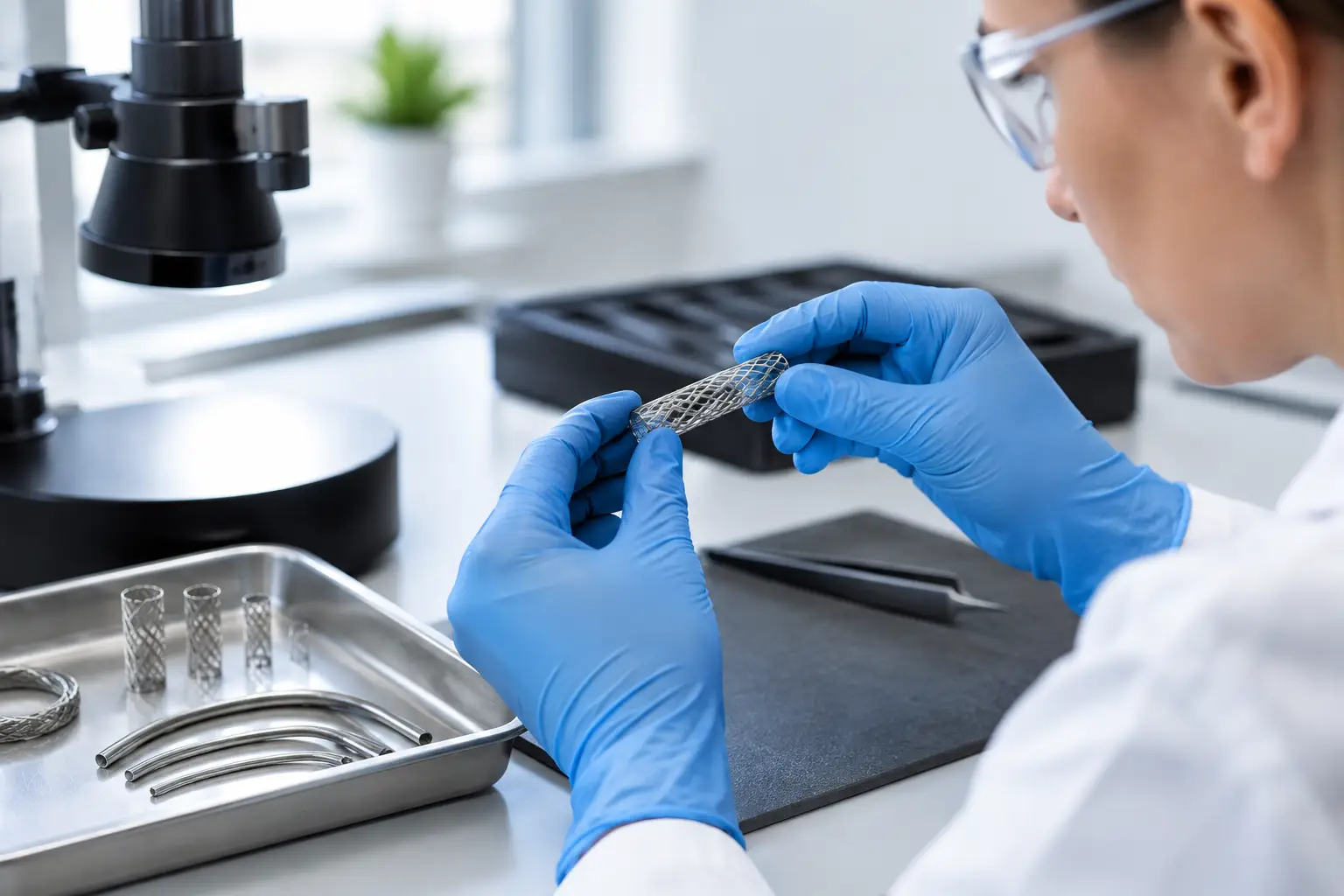
How to Inspect Nitinol Components for OEM Use
Learn how to inspect nitinol components with a risk-based OEM framework covering incoming checks, shape memory, surface quality, traceability, and records.
Learn how to inspect nitinol components with a risk-based OEM framework covering incoming checks, shape memory, surface quality, traceability, and records.

Planning medical device tech transfer requires more than a process map. Build a documented, risk-based path from design output to repeatable production.
Planning Medical Device Tech Transfer That Holds Up Read Post »
Build a defensible nitinol supplier selection process for invasive wire components, assessing quality systems, traceability, capacity, and change control.
Compare repositionable versus fixed wire designs through an OEM lens: retention, workflow, traceability, and controlled nitinol component manufacturing.
Use nitinol supplier evaluation to assess quality systems, traceability, cleanroom controls, capacity, and change management for medical OEM components.
Nitinol tolerances cause more scrap than any other line on a drawing. The reason is simple. Engineers borrow tolerance blocks
Nitinol Tolerances and Inspection: What to Put on the Drawing Read Post »
Superelastic and shape memory nitinol are the same alloy in two different states. Buyers often treat them as two materials.
Superelastic vs Shape Memory Nitinol: How to Choose Read Post »
Nitinol laser welding is the step where many device assemblies quietly go wrong. The alloy welds to itself reasonably well.
Nitinol Laser Welding and Joining for Medical Device Assemblies Read Post »
Nitinol electropolishing decides how a finished component behaves inside the body. The alloy is only half the story. Surface condition
Nitinol Electropolishing and Surface Finishing for Medical Devices Read Post »
Nitinol shape setting is the step that turns a length of wire into a device with a memory. It is
Nitinol Shape Setting and Heat Treatment Explained Read Post »