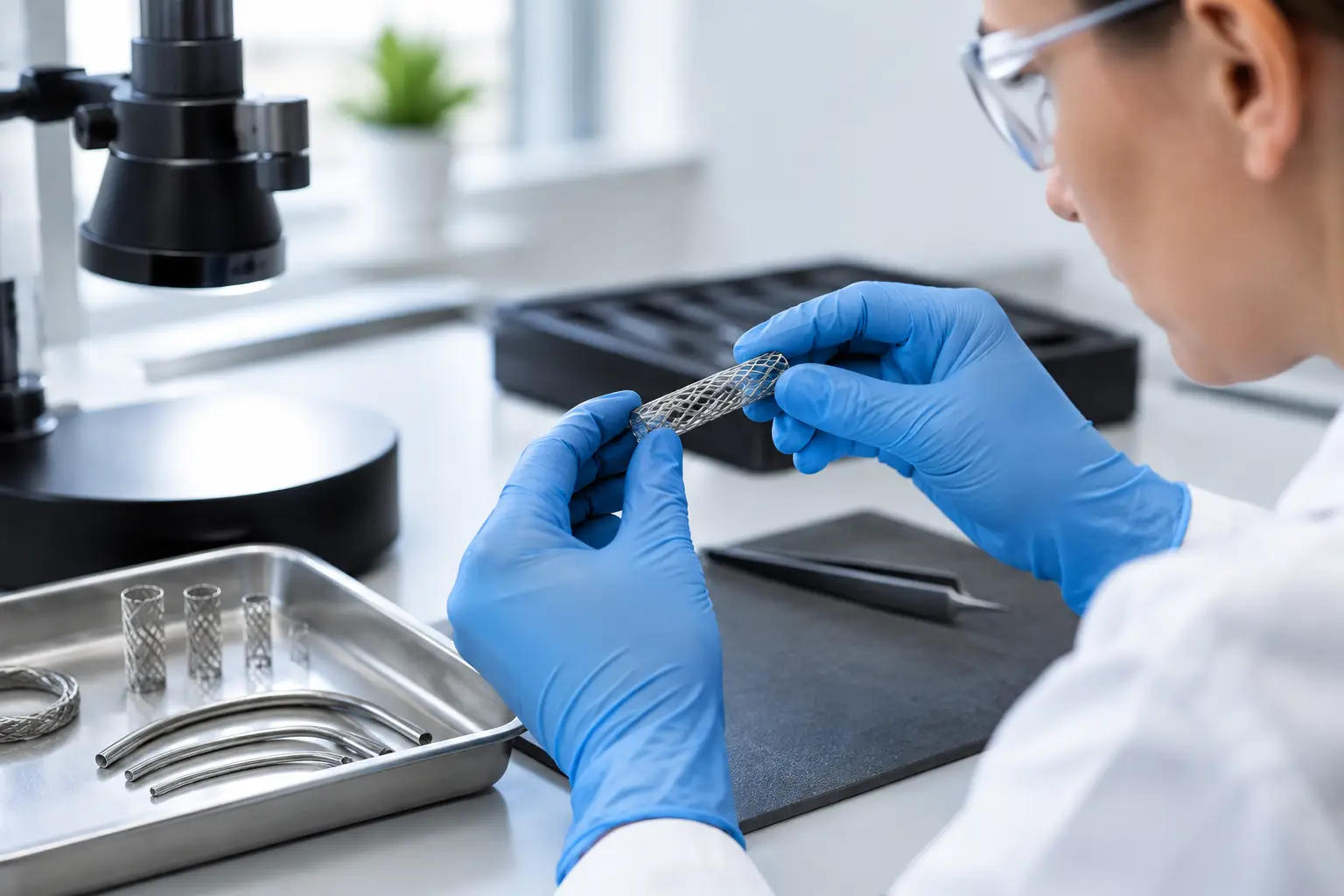
How to Inspect Nitinol Components for OEM Use
Learn how to inspect nitinol components with a risk-based OEM framework covering incoming checks, shape memory, surface quality, traceability, and records.
Learn how to inspect nitinol components with a risk-based OEM framework covering incoming checks, shape memory, surface quality, traceability, and records.

OEM versus captive manufacturing affects control, cost, quality accountability, and speed. See how medical-device teams can choose the right model today.
Planning medical device tech transfer requires more than a process map. Build a documented, risk-based path from design output to repeatable production.
Planning Medical Device Tech Transfer That Holds Up Read Post »
OEM partnerships for invasive nitinol components demand more than capacity. See how quality systems, traceability, and scope alignment reduce supply risk.
OEM Partnerships That Reduce Component Supply Risk Read Post »
Supplier traceability gives medical device OEMs the documented control needed to qualify components, investigate issues, and protect supply continuity.
Device traceability gives medical device OEMs documented control of materials, production, and release records when qualifying a specialized supplier.
An OEM manufacturing assessment helps medical-device teams verify supplier quality systems, traceability, capacity, and documentation before approval.
OEM Manufacturing Assessment for Medical Devices Read Post »
This guide to OEM technical files explains the records manufacturers need to qualify invasive nitinol component suppliers and support design workflows.
A Guide to OEM Technical Files for Device Makers Read Post »
Wire supplier evaluation for medical device OEMs: assess quality systems, traceability, cleanroom controls, capacity, and change discipline in sourcing.
Wire Supplier Evaluation for Medical Device OEMs Read Post »
Clarify OEM finishing responsibility early to protect device compliance, traceability, and launch timing when sourcing nitinol wire components in Europe.